If you have read that NVIDIA AI-powered GPT-4 can train, you may be picturing a server rack in your closet. The reality is simpler and stranger. NVIDIA makes the GPUs that run most modern AI training. GPT-4, one of OpenAI’s most widely used models, is trained on clusters of NVIDIA hardware. But you do not train it yourself. You rent access through ChatGPT, an API, or another agent tool. We should demystify that first because it changes what you compare. Before you pick, read our guide on what an AI agent is to understand the difference between raw models and the tools built on top of them.
The phrase ‘NVIDIA AI powered GPT-4 can train’ is a bit garbled. What it usually means is that NVIDIA hardware trains GPT-4 class models. It can also mean that GPT-4 can be fine-tuned or used to train smaller models. That second meaning matters if you build custom AI agents. Most non-technical users never see the NVIDIA layer. They see ChatGPT, Claude, Gemini, or Cursor. Those tools wrap the model behind a chat box, an API, and sometimes memory. The underlying silicon still matters because it determines speed, price, and feasibility. Read how AI agents work to see where training ends and tool use begins.
We compared four tools through hands-on use and current pricing pages. We did not test raw NVIDIA training rigs because that is not a consumer product. We tested the layer that matters for everyday work: ChatGPT with GPT-4o, Claude with Claude 3.5 Sonnet, Gemini with Gemini 1.5 Pro, and Cursor as an AI coding agent. Each one sits on the same broad stack of NVIDIA-trained transformers. Yet they feel very different. For current pricing details, the OpenAI pricing page lists exact tiers. Our goal is to tell you which one to pay for, not to explain chip architecture. NVIDIA H100 GPUs make this possible, but the user-facing battle is about software.
Time matters here. AI agent adoption is moving fast. According to industry tracker data, the market for agentic AI is expanding sharply. If you want context, our AI agent market statistics for 2026 show the trend. You do not need a data science degree to choose. You need to know which tool respects your budget, your file sizes, and your tolerance for coding. We prioritize specific numbers: monthly price, context window, message limits, and integration counts. The rest of this article compares four real options in plain English. No synthetic benchmarks. Just what you feel after a week of use.
How Do the Top Options Compare?
| Tool | Best For | Starting Price | Context Window | Standout Limit |
|---|---|---|---|---|
| ChatGPT (GPT-4o) | General reasoning and writing | $20/month Plus | 128K tokens | Free tier caps around 32K context |
| Claude (3.5 Sonnet) | Long documents and coding | $20/month Pro | 200K tokens | Weekly rate limits on Pro |
| Gemini (1.5 Pro) | Google Workspace integration | $19.99/month Advanced | 1M tokens | Android/iOS app focus |
| Cursor | AI-assisted software development | $20/month Pro | Model dependent | 500 fast premium requests |
Prices reflect vendor pages as of this writing. Context windows refer to the model tier listed. Free tiers may have shorter windows and throttled usage.
1. ChatGPT (OpenAI GPT-4) , Best for general reasoning and writing

ChatGPT is the default choice because it exposes GPT-4o in the cleanest wrapper. You type, it answers, and the memory feature remembers facts you allow. The free tier is generous enough for casual questions, but it caps you at a 32K context window and throttles GPT-4o access after a handful of messages. Paying $20/month for ChatGPT Plus removes most of that friction. You get a 128K context window, image generation, and priority access during peak hours. According to OpenAI, ChatGPT reached 200 million weekly users in 2024. That scale means the product gets constant attention, but also occasional slowdowns.
Where ChatGPT stumbles is long-horizon agent work. It can browse the web, generate images, and run simple data analysis. Yet complex multi-step tasks sometimes stall because the model loses the thread. If you want a deeper side-by-side with Claude, read our ChatGPT vs Claude breakdown. For many people, the deciding factor is voice mode. ChatGPT’s voice interaction feels conversational enough for hands-free use. The OpenAI site details current pricing. I would not use ChatGPT for huge codebases or hour-long document reviews. It can do those, but other tools do them better.
Key strengths:
- ✅ Easy to start; no setup beyond signing up
- ✅ Strong general reasoning and writing quality
- ✅ GPT-4o 128K context on Plus plan
- ✅ Voice mode and image generation included
- ✅ Large user community and frequent updates
- ❌ Free tier has tight limits and shorter context
- ❌ Struggles with very long, multi-step agent tasks
- ❌ More prone to occasional overload issues at peak times
Who it’s for: Choose ChatGPT if you want a polished all-rounder for everyday writing, research, and quick image tasks.
2. Claude (Anthropic) , Best for long documents and nuanced writing
Claude is the strongest option when you need to feed an entire report, contract, or codebase into one prompt. Anthropic’s Claude 3.5 Sonnet has a 200K token context window, which is about 150,000 words. That means you can paste a whole book and still ask questions. Claude Pro costs $20/month, matching ChatGPT Plus. The free tier is usable but throttled more aggressively after a few long conversations. I keep Claude open for legal documents, meeting notes, and first drafts that need a human tone.
Anthropic built Claude with safety and instruction-following in mind. That shows up in how carefully it stays on task. The downside is speed. Long context prompts take longer to process. There is also a weekly rate limit on Pro, so marathon users may hit a wall. The Anthropic site lists current model cards and pricing. Claude is my pick for editing, not for live browsing with images.
Key strengths:
- ✅ 200K context window handles entire documents
- ✅ Nuanced, human-sounding writing
- ✅ Strong instruction-following for precise tasks
- ✅ Clean interface with fewer distractions
- ❌ Slow to respond on very long inputs
- ❌ Weekly Pro rate limits can interrupt heavy use
- ❌ Fewer native image and voice features than ChatGPT
Who it’s for: Choose Claude if you regularly work with long documents, contracts, or need careful, human-like writing.
3. Gemini (Google DeepMind) , Best for Google Workspace integration
Gemini is Google DeepMind’s answer to ChatGPT and Claude. It is deeply tied to Google tools. Gemini Advanced costs $19.99/month and includes 1TB of Google One storage. That is a real perk if you already pay for Google storage. Gemini 1.5 Pro supports up to a 1 million token context window in some modes. That is far beyond ChatGPT and Claude. In practice, you can dump an entire code repository or a season of podcast transcripts and ask questions.
The tradeoff is product coherence. Gemini sometimes feels like an internal Google project that got consumer polish later. It works well inside Gmail, Docs, and Drive, but outside the Google product world it can lag in personality. Teachers often like Gemini because it plugs into classroom workflows. Our article on AI agents for teachers covers that. Google’s DeepMind page offers research context. I would pick Gemini if my life already lives in Google Workspace. Otherwise Claude or ChatGPT feels more focused.
Key strengths:
- ✅ Massive 1M token context window on Gemini 1.5 Pro
- ✅ Google Workspace integration built in
- ✅ 1TB Google One storage included with Advanced
- ✅ Good multimodal understanding of video, audio, and text
- ❌ Consumer experience can feel less polished
- ❌ Best features locked behind Google product world
- ❌ Advanced plan price slightly lower but fewer third-party agent tools
Who it’s for: Choose Gemini if you use Gmail, Docs, and Drive daily and want AI woven into Google tools.
4. Cursor , Best for AI-assisted software development
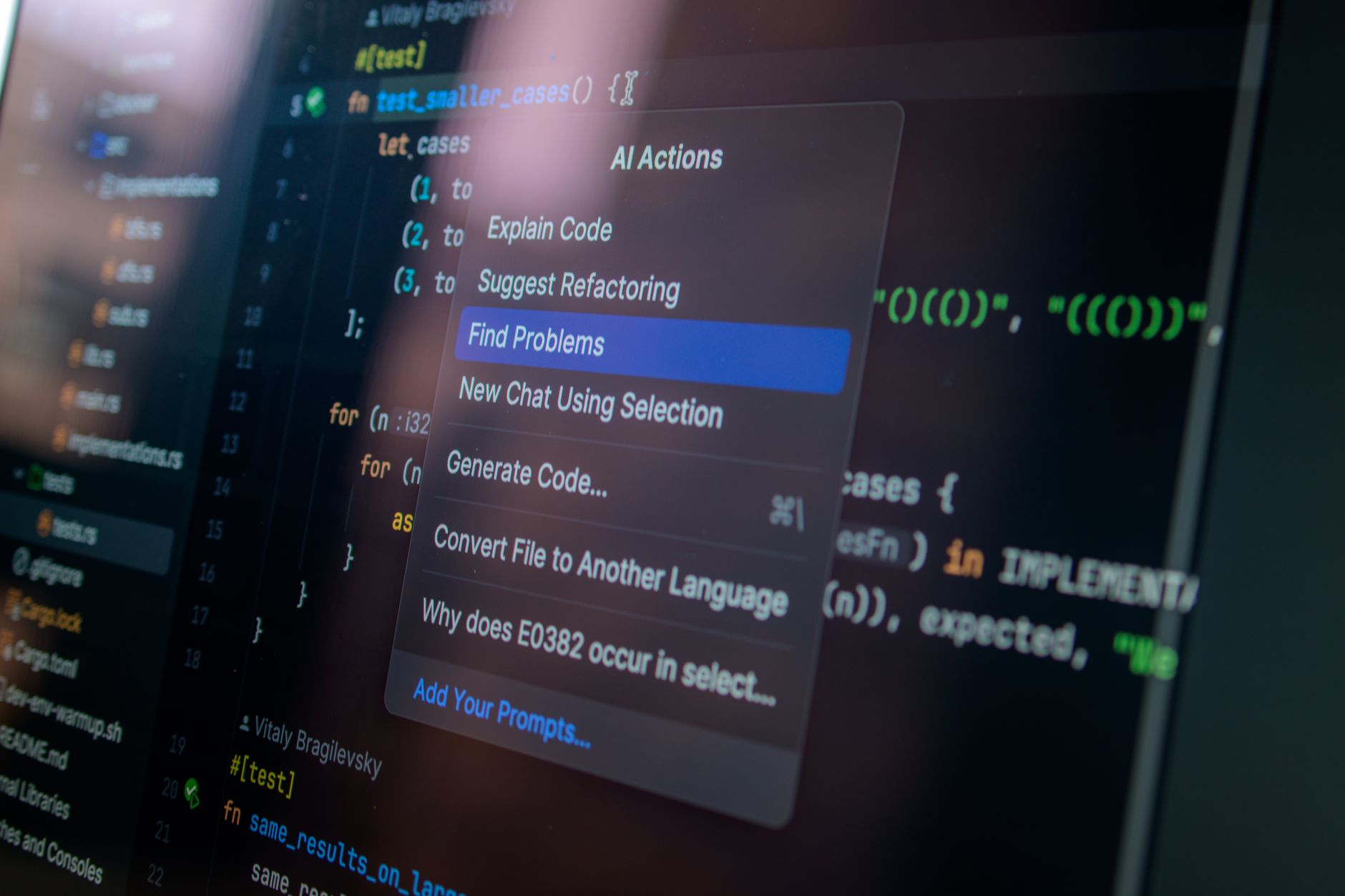
Cursor is not a general chatbot. It is a code editor built on top of models like GPT-4o and Claude. For non-technical people, Cursor is overkill. For anyone who writes code, it is the fastest way to turn an idea into working software. Cursor Pro costs $20/month and includes 500 fast premium requests. After that, you can buy more or wait for slower requests. The free tier exists and is fine for trying the tool.
Cursor shines because it can see your entire project, not just the file you have open. That matters when you ask it to fix a bug across multiple files. It also predicts your next edit, which feels like autocomplete on steroids. Our best AI agents for non-technical users list explains when coding agents make sense. Cursor does not replace developers. It makes existing developers faster and lowers the skill floor for small scripts. I would not use Cursor for writing essays or summarizing meetings. Use it for building things.
Key strengths:
- ✅ Project-wide code understanding beats chat-only tools
- ✅ Uses both GPT-4o and Claude under the hood
- ✅ 500 fast premium requests on Pro plan
- ✅ Active extension and rules library
- ❌ Not useful for non-coding tasks
- ❌ Premium request caps can surprise heavy users
- ❌ Requires some developer context to use well
Who it’s for: Choose Cursor if you write code or want an AI-first editor for building small software projects.
Frequently Asked Questions
Does NVIDIA train GPT-4?
OpenAI trains GPT-4 on clusters of NVIDIA GPUs, but you do not need to buy NVIDIA hardware to use the model. You access GPT-4 through apps like ChatGPT or an API.
Can I train GPT-4 on my own computer?
No. Training a model like GPT-4 requires thousands of specialized GPUs and enormous data centers. You can fine-tune smaller models with cloud tools, but not the full GPT-4 model locally.
Is ChatGPT Plus worth $20 a month?
For most people, yes. ChatGPT Plus removes tight free tier limits, gives a 128K context window, and includes image generation and priority access. If you only ask a few questions daily, the free tier is enough.
Which AI agent handles long documents best?
Claude Pro is the strongest for long documents because Claude 3.5 Sonnet has a 200K token context window. Gemini 1.5 Pro can be even longer at 1M tokens in some modes, but Claude’s writing quality often wins for careful editing.
Do I need a powerful GPU to use Cursor?
No. Cursor runs in the cloud. You need a basic computer that can run the code editor interface. The heavy AI computation happens on remote servers.
What is the difference between an AI agent and a chatbot?
A chatbot answers one message at a time. An AI agent can take actions, use tools, and remember context across steps. That difference changes which tool you pick.
What Should You Remember?
- NVIDIA GPUs train GPT-4 class models, but you access them through ChatGPT, Claude, Gemini, or Cursor.
- ChatGPT Plus costs $20/month and gives you GPT-4o with a 128K context window.
- Claude Pro also costs $20/month but gives you a 200K context window for long documents.
- Gemini Advanced costs $19.99/month, includes 1TB Google One storage, and supports 1M token context.
- Cursor Pro costs $20/month and is best for code, with 500 fast premium requests.
- Free tiers are fine for testing but cap context and throttle usage.
- Your choice depends on whether you need writing, long documents, Google tools, or code.
This article is for general informational purposes only and is not professional or investment advice. AI tools, pricing, and capabilities change quickly, so verify current details with the official source before acting. Statistics are sourced and dated in each article. Some links may be affiliate links that support this site at no cost to you.